
The Rev’d Diane Miller – Keeley
Sunday, 26 July 2026. 35 Anniversary Service of thanksgiving for the All Saints Foodbank.
Readings: Micah 6:8-12, James 2:14-17, Matthew 25:31-45
Thank you Ivica and Lucy for inviting us to share this special service with you today. It’s 12 years since we were last here at a Sunday service and it’s lovely to reconnect with people we have known in the past and meet people we have yet to know. Thank you for the honour of sharing this day with you.
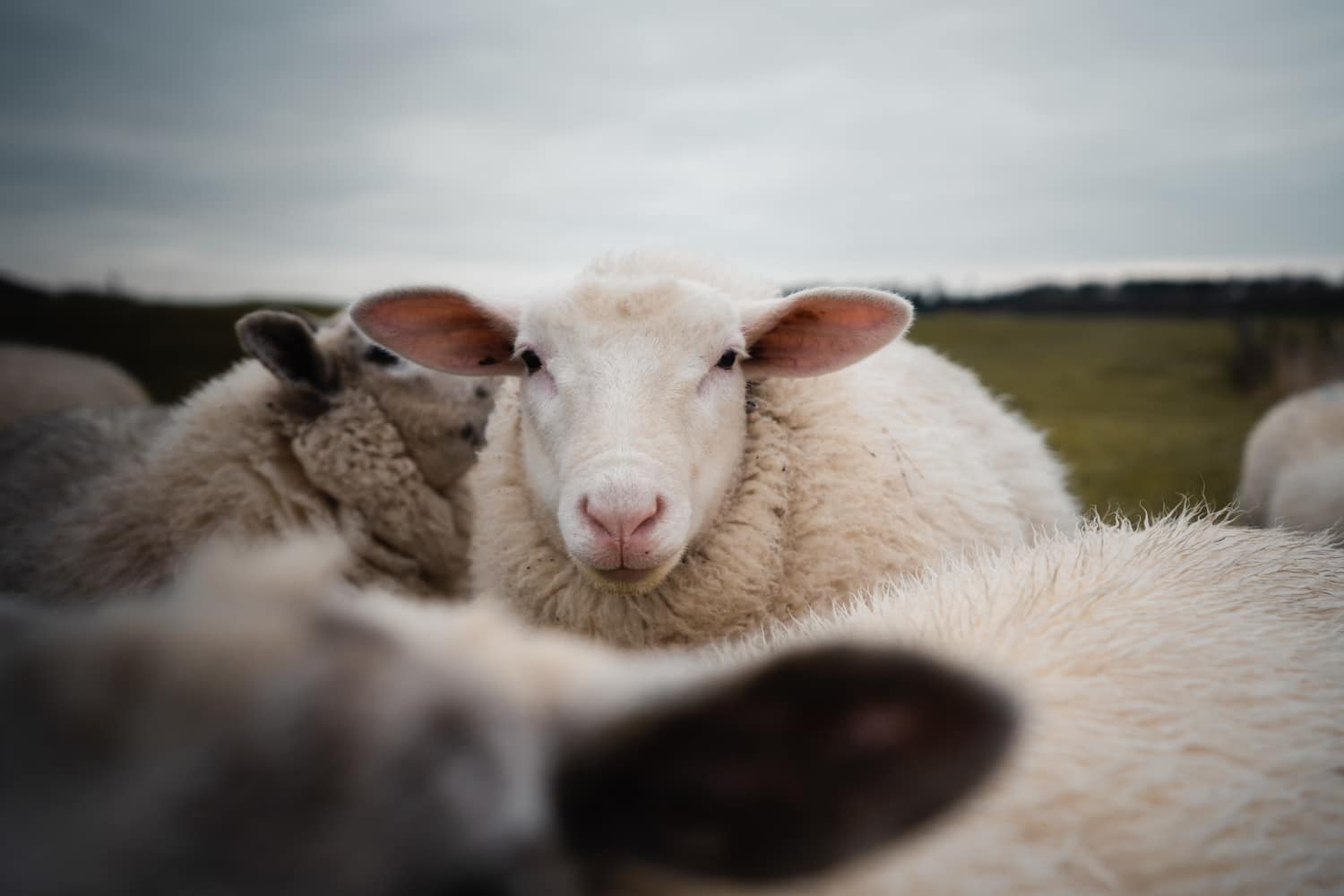
I don’t know how many times I have read this very familiar passage from Matthews Gospel and cringed – I’m such a bad sheep and such a good goat! The unnerving thing is that this particular passage has the capacity to lead either self-righteous smugness on the one hand or pathological guilt on the other, neither of which is healthy or desirable. So let’s face it, sometimes we are sheep and sometimes we are goats. Maybe, instead of feeling judged, we should see this passage as a health check, a kind of yard stick. Do we need to change some of our habits, our way of seeing things, our responses to people and situations? But before we do that, let’s explore this passage a little more.
The first thing we need to note is the reaction of the sheep and the goats.
The sheep were utterly surprised. When did we see you and respond in that way? We don’t remember seeing you hungry or thirsty or a stranger or naked or sick or in prison. The goats were shocked. What? When did we see you and not respond that way? If we’d known you were hungry or thirsty or a stranger or naked or sick or in prison we would have done something! Their actions (sheep) or lack of actions (goats) both sprang from an unconscious process.
Which brings us to the next thing to note – motivation. And this is the key to this passage. As one commentator notes, “It is easy to read this passage and miss the Gospel … we may see little more than a humanitarian call for work on behalf of society’s undervalued members. Subsequently, salvation is understood as that which we achieve.” If that is how we read this passage then we miss the gospel element, the good news it contains. The fact that the sheep and goats were both unconscious of their responses, indicates that there was no calculation involved, no expectation that they would be noticed or praised or judged, no effort to earn God’s approval or fear God’s disapproval. Their responses sprang from something different.
Let’s look at the sheep first. Somehow, from a deep and unconscious place, they responded to the need they saw before them with compassion and practical help. They had imbibed so deeply an awareness of God’s unconditional love for them, that, out of shear gratitude, out of knowing how undeserving they were of that gift and out of a desire that others should benefit from it, they couldn’t help themselves – they had to meet the need they saw before them. It simply bubbled out. Their motivation? Gratitude.
And the goats? Their complaint was that if they had known that God was in their midst they would most certainly have done the right thing. But God’s presence wasn’t obvious to them and they were left bewildered and resentful that they were not given the opportunity to strut their stuff. The trouble was they didn’t see what was in front of them; they didn’t recognize the face of God in the hungry, the thirsty, the stranger, the naked, the sick, the prisoner.
Metropolitan Anthony of Sourozh of the Russian Orthodox Church, wrote this: “Unless we look at a person and see the beauty there is in this person, we can contribute nothing to them. One does not help a person by discerning what is wrong, what is ugly, what is distorted. Christ looked at everyone he met, at the prostitute, at the thief, and saw the beauty hidden there. Perhaps it was distorted, perhaps damaged, but it was beauty none the less, and what he did was to call out this beauty.”
One is reminded of that wonderful Quaker saying: “There is that of God in everyone.” Easy to say, not always easy to recognize and accept. Let’s be honest, we are sometimes sheep and sometimes goats.
The third thing to note is the condition of the recipients. The hungry, the thirsty, the stranger, the naked, the sick, the prisoner have something in common – they are not in a position to give anything back. Many times in the teachings of Jesus he challenged the quid pro quo mentality – a favour for a favour. It is a mentality that permeates our society, but it’s not a gospel value. The gospel value is that we give freely with no strings attached – not even that of being deemed worthy of the gift. And that’s challenging. Our society has a notion of the worthy poor and the unworthy poor; the deserving and the undeserving. But the sheep responded to the need in front of them with no thought of getting anything back – not even gratitude. How do we do on that score – sheep or goats?
Today marks the 35th anniversary of the food bank here at All Saints. It was established in 1991. Do you remember what happened in 1991 in our country? We had what was dubbed the “Mother of all Budgets.” The then government introduced measures to redress what they saw as the financial needs of the country. As part of that strategy they cut benefits by up to a quarter, and, in so doing, doubled poverty overnight; they removed the housing subsidy and required market rentals which meant that families crowded into each other’s homes in order to pay the rent. In 1992, a year later, there was a spike in hospitalizations of children with diseases that had almost been eradicated but were related specifically to overcrowding.
Here at All Saints things swung into action. Les Ingham, a retired school inspector, was incensed by what was happening and the growing poverty people were experiencing. He gathered a group around him and set up the food bank. But he didn’t leave it there. Every month he collected statistics from all the local food banks and sent them to the Ministry to show the effects their policies were having on the lives of people. Social service and social justice hand in hand, putting into action the words from Micah – “to do justice and to love kindness”. This parish saw the need and responded to the need.
Some of you here were around at that time. We came here in December, 1992 and by then the food bank was a well-oiled machine. But that wasn’t the only need this parish responded to at that time. Every week a group met in the mornings and made school lunches for Bairds Intermediate because one of the teachers from this parish had noticed the increase in hunger amongst the pupils. Is Rosemary Ovens here? A need was seen and a need was responded to.
Many people over the years have been helped by the generosity and labour of those involved in the ministry of the food bank. These folks have given hours of time, petrol, energy and enthusiasm as they have met the very real need for the basic necessities of life. And folk from all sorts of places and organizations, individuals and schools, some of whom are represented here today, have seen the need and responded by donating the food required to fill the shelves.
We are living in a time when there is “a cost of living crisis” and every single one of us has felt the effect of it. And it’s likely, given the resumption of the war between the USA and Iran, that it will deepen. We will all feel it but the same folk will bear the brunt of it, those already struggling to feed their families. Without a doubt, the need for food banks will increase.
But are we also facing another “cost of living crisis”, one that has nothing to do with money, but is all about attitudes?
Author Arundhati Roy, author of Booker prize winning novel “The God of Small Things”, describes the cost of living, or, put another way, what it costs to live well, as this:
“To love. To be loved.
To never forget your own insignificance.
To never get used to the unspeakable violence
and the vulgar disparity of life around you.
To seek joy in the saddest places.
To pursue beauty to its lair.
To never simplify what is complicated
or complicate what is simple.
To respect strength, never power.
Above all, to watch.
To try and understand.
To never look away.
And never, never to forget.”
Sheep and goats – how will we respond to the needs of those around us today in 2026? If we see this Gospel as a health check, a yardstick, a cost of living index, to measure how well we are doing, then we will have to be honest and admit that sometimes we are sheep and sometimes we are goats. It will be our unconscious attitudes that direct our behaviour one way or the other. But attitudes are capable of being changed, they are not set in stone; the cost of living index is capable of being adjusted.
We have the God-given capacity to reflect on our behaviour, to question our motivations, to transform our thinking. That is the good news of the Gospel. By orientating our lives towards all that is good and lovely and wholesome and true; by allowing the breath of God to enter into our very beings; by absorbing the unconditional love of God made plain to us in the life of Jesus, we will be transformed. Harshness will be replaced by compassion; judgement by concern; self-interest by responsiveness. Gratitude will flow out of us unbidden.
May we be more often sheep than goats. And when we are goats, may we have the honesty, the insight and the courage to reflect on the cause, and adjust our attitudes to match that of Christ’s, being aware that whatever we do to our brothers and sisters in the human family, we are doing to the Creator, the Redeemer and the Giver of Life. Amen