
Alice Carrell
All Saints Day, 1 November 2026
Readings: Revelation 7:9-end, Psalm 34:1-10,22, 1 John 3:1-3, Matthew 5:1-12
There is a scene in the Monty Python film, Life of Brian where Jesus is giving his Sermon on the Mount. And there are some characters at the back of the crowd that can’t exactly hear what is being said, and they’re having an argument about it. They mishear, “blessed are the peacemakers,” for “blessed are the cheesemakers,” to which someone asks – “what’s so special about them?” Another character responds, “it’s not meant to be taken literally; it refers to any manufacturer of dairy products.” Later, “blessed are the meek,” gets misheard as “blessed are the Greek,” with the remark, “the Greeks with inherit the earth.”
This is a funny play on words and misinterpretation of a quite profound, and now well-known, scripture, but it serves to remind us how easy it is to mishear and misinterpret the good news of Jesus.
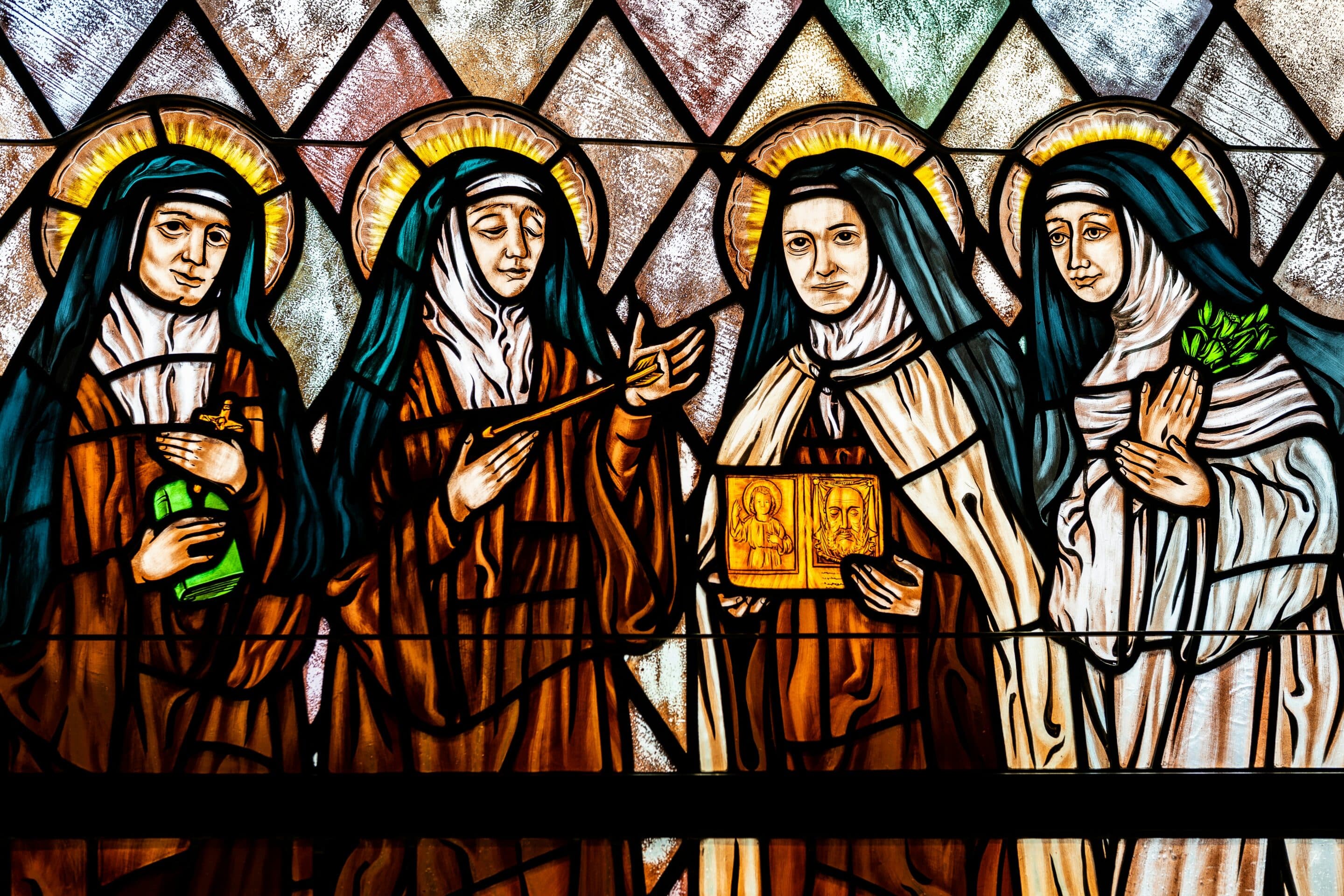
Today we remember All Saints, particularly so because this is the name of our church. In the New Testament, “saints” means all the believers devoted to God. Over time saints has come to be seen as martyrs and those who have died for their Faith. Throughout the liturgical calendar, we remember specific saints, acknowledging their life, Faith, and often death. But All Saints Day is about acknowledging our sense of communion with all those who have gone before us and have witnessed to their faith in Christ. It is a day where we recall past Christians whose lives can be an inspiration for us, and is a day to remember our call now to live lives worthy of the gospel with Faith (Philippians 1:27).
Our readings this morning help us to understand the nature and character of this communion of saints, which we are all a part of.
In 1 John 3, it says that the Father’s great love for us makes us children of God. The communion of saints is thus a family that expresses love for one another like that of a loving parent towards a child. Love in a family is generally deep, and sustains through both the triumphs and struggles of life. There is a trust and reliance on that love that is unconditional. A couple of weeks ago we heard from the pastoral care team about responses for showing care in our families and communities, through things like; lingering longer, wondering where people are, the gift of thanks, and caring concern. It is in caring for one another and showing love that we act as a family in loving relationship as the communion of saints. And just as a child looks to a parent for guidance and assurance, we too look to our loving God for wisdom and direction
Revelation 7 tells us the communion of saints is great and diverse. Verse 9 says there was “a great multitude that no one could count, from every nation, tribe, people, and language, standing before the throne.” These are saints who have faithfully endured the pressures, struggles, joys, and even persecutions of life. The communion of saints is not exclusive, and the church is indeed at its best when all people, from all walks of life, and all cultures, are present and represented. This is what I love about the Three-Tikanga Anglican Church in Aotearoa – that we celebrate the expressions and faith of people from different cultures in our Province. We have all been brought into the communion of saints, and we also need to stretch the net wider to include others – in our home groups, places of ministry, the areas we serve in, with an invite to church.
Revelation 7 also shows that the communion of saints as a worshipping community. This a community that first and foremost worships God. The saints praise God, singing blessing and honour to him, for all that God has brought them through. There is also faith as this communal worship and thanksgiving is for a time when hunger and thirst will be “no more” and “every tear from their eyes” will be wiped away (7:16-17) – there is hope and worship for what is to come. This kind of love and worship for God, is the foundation for our relationships and love for one another.
Then we come to our Gospel reading. Through the Beatitudes in Matthew, we come to understand that as members of the communion of saints, we are citizens of the kingdom of heaven. A kingdom of: the poor in spirit; the mourners; the meek; those who hunger and thirst for righteousness; the merciful; pure in heart; peacemakers (which may or may not include cheesemakers); and those who are persecuted for the sake of righteousness. The Beatitudes describe the nature of the kingdom of God and how transformative it is for those who choose to respond to it. For the original audience of the Sermon on the Mount, it was good news that brought real hope to their situations. These were people oppressed by the Roman Empire and forced to pay huge taxes; the marginalised, and people who were subject to the strict rules of the religious leaders that they could never live up to. And Jesus is saying that they will receive the kingdom, inherit the earth, and be comforted in their grief. In their need and desire for God, they are filled. They become dependent on God, not self-sufficient and reliant solely on themselves.
Now, don’t mishear this message and think that these characteristics are entry requirements to getting into the kingdom of heaven. It can be easy to think, after reading this, that we have to become poor in spirit, be in perpetual mourning, or seek persecution. These things often come on their own. But we can find encouragement in knowing that when we mourn, we will be comforted; that in showing mercy and care, we will also receive mercy and care; and in enduring life with meekness and a gentle spirit, our inheritance will be the earth. And with this knowledge, we respond in faith that God does indeed bless those who struggle, are marginalised, and seek peace in the world.
In the Psalm for today, we hear the words of praise written by David in his own time of trouble. This was before he was king, although he had been anointed as king and was being pursued by King Saul. There are many parallels we can make between Psalm 34 and the Beatitudes, namely that in both scriptures it is the persecuted who receive the kingdom of God. But it is also those who seek God, who “hunger and thirst for righteousness,” who will be filled. In Psalm 34, it says, “those who fear [God] lack nothing.” David’s words reveal a deep faith and trust in God, in the middle of his persecution and hard time, knowing that God is the one who delivers and saves
This brings us back to the communion of saints. We can find inspiration and hope in the faith of those who have gone before us and in the hope of what is to come. Revelation 7 inspires hope for a better world – that among marginalised communities there will be radical renewal, even when there are no signs of change now. The Beatitudes bring good news for all because Jesus is giving us a new understanding of God’s character. A character of love and one that we can trust in for now and that the future. This also brings hope and comfort for us today, particular with all that is going on in the world and the news headlines that report on wars and natural disasters around the world, with the upcoming general elections, the cost of living crisis we are in, and everything else in our lives that causes us concern. Through that, we can trust in God and find encouragement in all the saints who have gone before us and endured with faith.
So, as we commemorate All Saints Day, we remember the communion of saints as a family, as great and diverse, as a worshipping community, and as citizens of heaven. We acknowledge the communion of saints through our relationship with one another, knowing that in both the struggles and triumphs of life, we can continue to encourage one another with faith in a broken world that has not yet fully received Jesus. We acknowledge our communion with the saints who have gone before us, providing encouragement and inspiration for our own journeys of faith.
The saints live lives that bless and rejoice in God, and with trust and reverence, they seek God in all that life brings. These lives are a witness to God, who blesses them in difficult times, and delivers and cares for them. We too are invited into this communion of saints, through a life of discipleship, marked by faithfulness and perseverance.
So, as we go out today, let us be encouraged by the faith of all the saints, and continue in our own faith in a loving God whose promises remain. Amen!