
The Rev’d Ivica Gregurec
Sunday, 19 April, Year A, Easter 3
Readings: Acts 2:14a, 36–41; Psalm 116:1–4, 11–18; 1 Peter 1:17–23; Luke 24:13–35
There is a particular kind of grief that settles in after catastrophe, which is not the sharp, howling grief of the immediate moment, but the grey, numbing grief of the days that follow. The grief of walking away.
That is exactly where we find two disciples on the road to Emmaus: Jerusalem is behind them and they are walking away, not as cowards, but as sorrowful people who had hoped, and who now believe that hope to have been mistaken. ‘We had hoped’, three of the saddest words in all of Scriptures, ‘we had hoped that he was the one to redeem Israel.’ It is past tense, ‘had hoped’, but not anymore.
Into that grey and grieving space, a stranger draws alongside them and asks: ‘What are you discussing’?
This road to Emmaus is not ancient history. Millions of people today are on this very road: people who had hoped for peace, for justice, for a politics that served human dignity, and who now walk away in disillusionment. Wars grind on, displacing millions; climate anxiety haunts a whole generation; social trust has fractured and many people, including many in our own families and pews, have started walking away from faith, not in anger, but in that same weary resignation: we had hoped.
The Emmaus story does not flinch from this. It begins not with triumphant resurrection proclamation, but with two people in grief, walking away. And the risen Christ does not appear to them in a blaze of glory. He comes alongside them, quietly, gently, at their pace, on their road.
Notice that the risen Christ does not immediately correct them. He asks a question, he listens, he lets them tell their story, their confusion, their grief, their shattered hopes, before he offers a single word of interpretation.
Esther de Waal, the beloved Anglican writer and scholar of the Benedictine and Celtic traditions, observes that God consistently meets us, not by removing us from the ordinary paths of our lives, but by transforming them from within. The ancient Celtic Christians understood God as the one who accompanies: present on the threshold, present on the journey, present in the in-between places where we feel most lost. The road to Emmaus is every road we walk when we do not yet know that we are not alone.
And here we hear the voice of Saint Augustine, who wrote in his Confessions: ‘You made us for yourself, and our heart is restless, until it repose in you’. Those disciples were restless with loss and a hope that had seemed to die. Augustine spent years on his own road of restlessness before the stranger caught up with him too. The heart’s restlessness, he insists, is not faithlessness, but the very shape of a heart made for God, aching toward what it has not yet fully received.
As the stranger opens the Scriptures, drawing together Moses and the prophets, weaving a new pattern through texts they thought they already knew, something happens inside them that they cannot name until later. ‘Were not our hearts burning within us while he was talking to us on the road, while he was opening the scriptures to us’?
The burning heart is one of the most luminous phrases in all of the gospels.
This is not intellectual assent or a theological puzzle solved. It is something felt before it is understood: a warmth, an ignition, an aliveness that breaks through the numbness of grief.
The Anglican theologian Sarah Coakley reminds us that this kind of knowing: heart-knowledge, the knowledge of longing and encounter, is not inferior to rational theology. It is, she argues, the very ground from which true theology grows. The disciples did not first think their way back to faith; they felt their way back, through a burning in the chest, before they understood what was happening.
This speaks directly to our age. The question is not only: can you defend the resurrection? The question is also: has your heart ever burned? Have you ever felt, even fleetingly, that presence drawing alongside you on the road?
Cleopas and the other disciple reach the village. The stranger makes as if to go on. And they compel him to stay. ‘Stay with us, for it is nearly evening’. They do not yet know who he is. But something, that burning, that quality of presence, makes them unwilling to let him go.
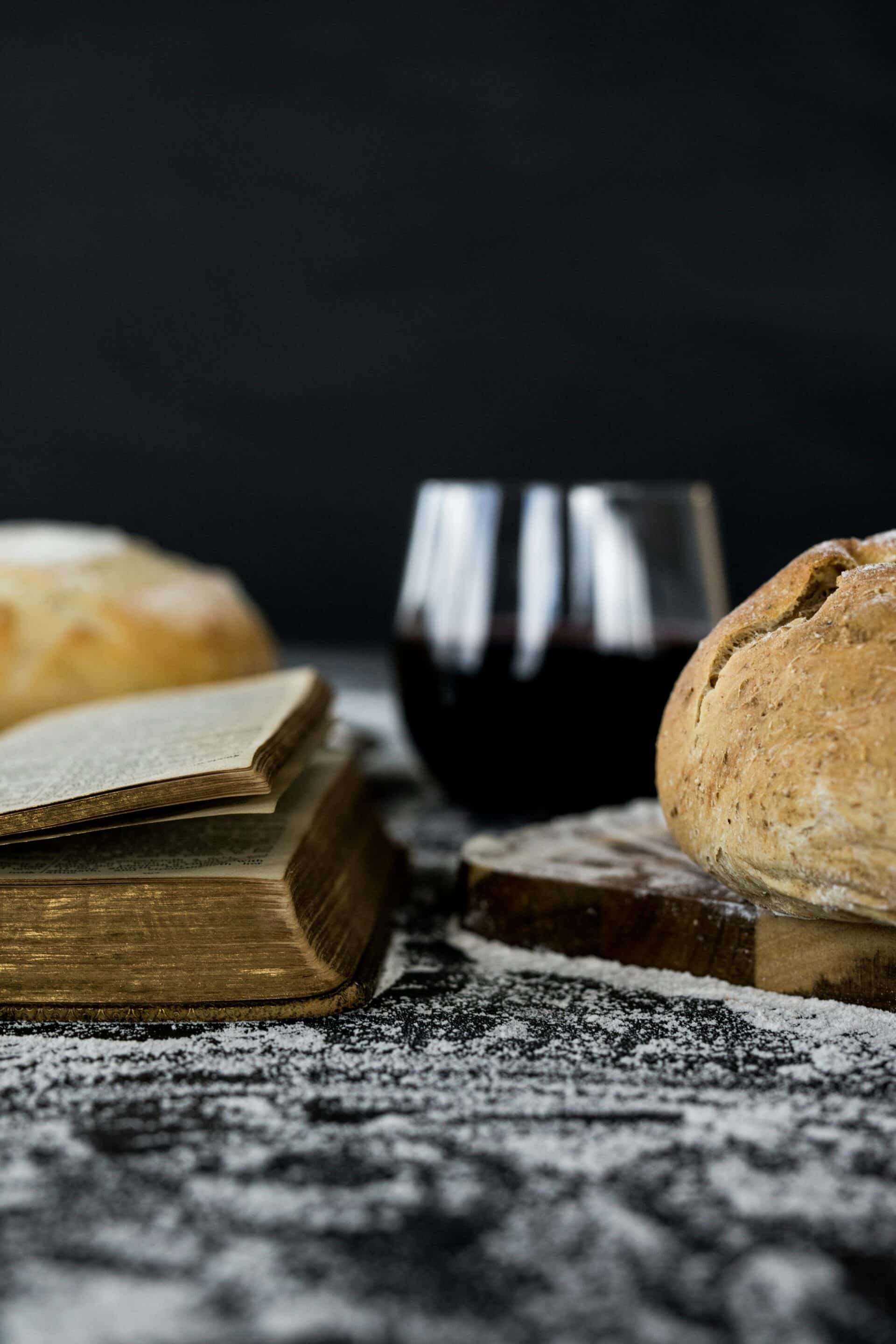
After he stays, they sit at table. He takes the bread, blesses it, breaks it, gives it to them and their eyes are opened.
The language is unmistakable. This is eucharistic language – precisely what Luke records at the Last Supper: taking, blessing, breaking, giving. They recognise the risen Christ not in the explanation of Scripture, though that prepared them; not in the face of the stranger, though that drew them; but in the familiar, bodily, ordinary act of a shared meal, in the breaking of the bread.
Every Eucharist is an Emmaus. We often come tired, confused, carrying our week’s weight of anxiety and grief, as those disciples came. We sit at table, we hear the Scriptures opened and in the breaking of bread, if we are attentive, our eyes too may be opened.
Saint John Chrysostom, preaching on the Eucharist in fourth-century Antioch, put it with characteristic sharpness: ‘Do you wish to honour the Body of Christ? Do not ignore him when he is naked. Do not pay him homage in the temple clad in silk, only then to neglect him outside where he is cold and ill-clad’. The body of Christ broken at the altar and the body of Christ broken in poverty and suffering are the same body. Eucharistic recognition sends us back into the world with new sight and new responsibility.
In our first reading, Peter proclaims before the crowd: God has made Jesus both Lord and Messiah. The crowd is cut to the heart. ‘What should we do’? Repent, be baptised, receive the Holy Spirit. This is not merely a personal religious invitation, but a cosmic announcement. The world has changed and a new creation has begun.
And what does that new creation look like? First Peter tells us: a community born anew, characterised above all by genuine mutual love for one another deeply, from the heart. The Anglican biblical scholar Elisabeth Schüssler Fiorenza reminds us that the earliest Christian communities were marked by a radical equality of dignity, cutting across lines of gender, ethnicity, and social standing. That vision has not been fully realised, neither in the Church, nor in the world. But it remains our calling.
And in our fractured, polarised age, the summons to love one another across our deepest differences is more urgent than ever.
Threading through everything, quietly and personally, is Psalm 116. ‘I kept my faith, even when I said, I am greatly afflicted’. The faith and the affliction coexist. The doubt and the devotion walk the same road. The two disciples did not stop walking simply because they had lost hope. They kept walking and that, it turned out, was enough.
The moment the disciples recognise Jesus in the breaking of bread, he vanishes. The encounter is complete and immediately, without waiting for morning, they get up and return to Jerusalem, back to the very place they had left in grief. They go running, because they have something to tell.
This is the pattern of every genuine encounter with the risen Christ. It does not leave us passive. It turns us around and sends us back, to the community, to the broken world, to the table where others are waiting, to the road where other grieving travellers walk alone.
The stranger is on the road with us. The Scriptures burn. The bread is broken. The eyes are opened.
So, friends, go. Tell what you have seen.
Amen